The Historic Route to Uniacke Estate
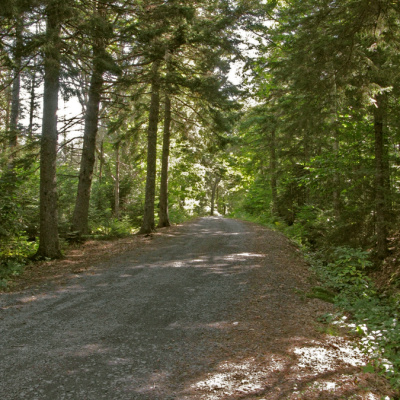
Later, this route became Highway #1, a name retained to the current day. Although in certain spots the present day Highway #1 travels a slightly different route than the stage coaches did, visitors can still walk along an extensive portion of the same road that passed by the house in 1813. The Post Road Trail is one of seven Uniacke Estate hiking trails visitors can enjoy.
Uniacke's Vision for His Estate
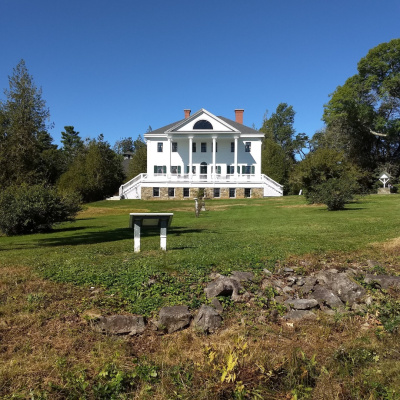
Uniacke set out to establish a country estate that would signal his prominence and career success to travelers on the road to Windsor. Many upper class people were establishing country estates in Windsor which was becoming an important commercial town with a major port, rich agricultural lands and a protective military presence.Entering Uniacke Estate Museum Park today, along the former stage coach route, visitors can still experience the same striking presence Uniacke House had when it was built.
Arrival and First Impressions
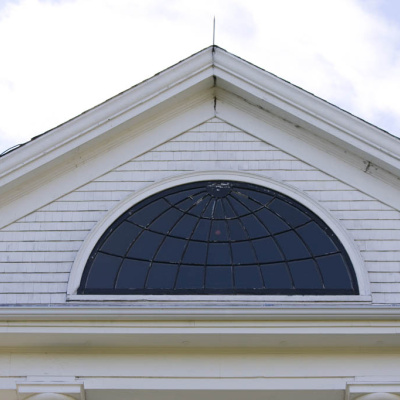
In the 1800s, travelers would have emerged from a long, rough ride through undeveloped, dense wilderness into the spectacular daylight of this well-groomed estate with its beautifully landscaped vistas. Approaching the front of the house, with its stately pillared portico, visitors would have been impressed by the beauty and grandeur of the place. Making an impression is what Uniacke intended, and, even now, nearly two centuries later, the same sight can take one's breath away.
The Growth of the Estate
Uniacke acquired the initial 1, 000 acre land grant in 1786 which included a farmhouse and frontage on Lake Martha. He continued to add to his estate over a period of more than 25 years. By 1819, the massive property included 11,340 acres, or about 4,590 hectares. Today's estate is smaller at 930 hectares, but the property remains an expansive one that is home to a variety of wildlife, diverse habitats and distinct geological features, including the drumlin hill, lakes, bogs and forests.
Layout and Views
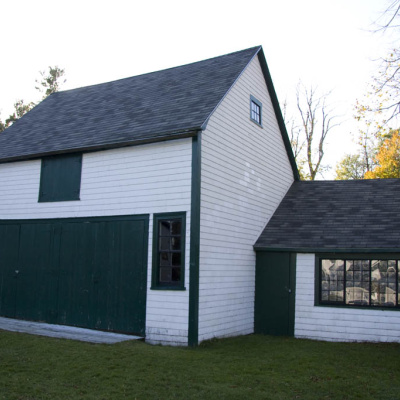
Most of the outbuildings were clustered near the main house and the barn, with the hot house in the nearby orchard, and the boat house placed at the end of a well-placed allée of trees extending from the house to the lake. Standing on the impressive portico, one could view stage coaches en route from Halifax and the sweeping vista encompassing Lake Martha and Norman Lake, with tranquil fields in the distance and an expansive garden in front of the house.
Uniacke as a Gentleman Farmer
Uniacke was a gentleman farmer at heart and devoted himself to clearing and improving woodlands and wetlands, experimenting with composting materials and methods, and growing a variety of agricultural and horticultural crops. He also kept horses, cattle, sheep, pigs and poultry. He was interested in the latest agricultural methods and spent his last years as a country gentleman improving his land and growing exotic plants in his hothouse. Late in life, he planted acorns he carried back from Ireland. Today, visitors can still see some of the mighty oaks he planted.
Landscaping and Improvements
The fields and pastures may have been fenced, but, as the land was improved, hedges were planted and roads and open fields were edged with dry-stone walls and lined with trees. Trees were also used to form gateways, and planted in the fields to add to the picturesque beauty of the place. The brook was improved with stone walls and willow plantings.
The Estate's Evolution
Stone walls have been discovered in what is now forest, evidence that many of the 100 acres cleared for Uniacke have since returned to the wild. His efforts to create a self-supporting estate were not successful due to the unsuitability of the land for farming, but the house remained a popular summer getaway for the family for generations.
The English Landscape Garden Style
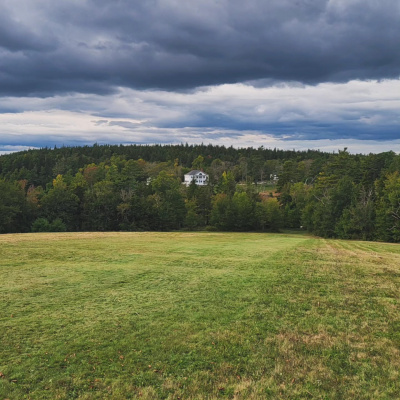
The grounds of Uniacke’s estate were designed in the English Landscape Garden style which was popular in the early 1800s. A key feature of this style was a long, uninterrupted view, or vista, and the one at Uniacke’s estate was unrivaled in its day.
The Haha Wall
Sheep, grazing in the distance, contributed to the idyllic scenery one could admire from the portico of the grand house. To contain the sheep and keep them from wandering onto the lawns, Uniacke constructed a natural-looking barrier called a haha wall--rather than building a fence--to avoid obstructing the panoramic view. Visitors to Uniacke Estate can still view this haha wall, one of only two known to remain in Canada.
Creating the Estate
1786: The original 1,000 acre grant at Mount Uniacke included a farmhouse and frontage on what Uniacke called Lake Martha, but it did not include the site where the house, barn, and other outbuildings would eventually be built.
1787: 2,700 more acres were acquired in four transactions.
1796: 500 acres were acquired.
1813: A 400-acre property and several parcels of land totaling 2,540 acres were bought from the estate of Charles Morris, who had been Surveyor General. One of the parcels would be the site of the grand house. Building began that year.
1815: A 200-acre parcel was the last land purchased for the estate.
1819: Uniacke received an additional 4,000-acre land grant.